Minus Four in the Boot: A Cold-Snap Field Guide to Frozen Cans

Photo: Municipal Government of Luba, Public domain, via Wikimedia Commons
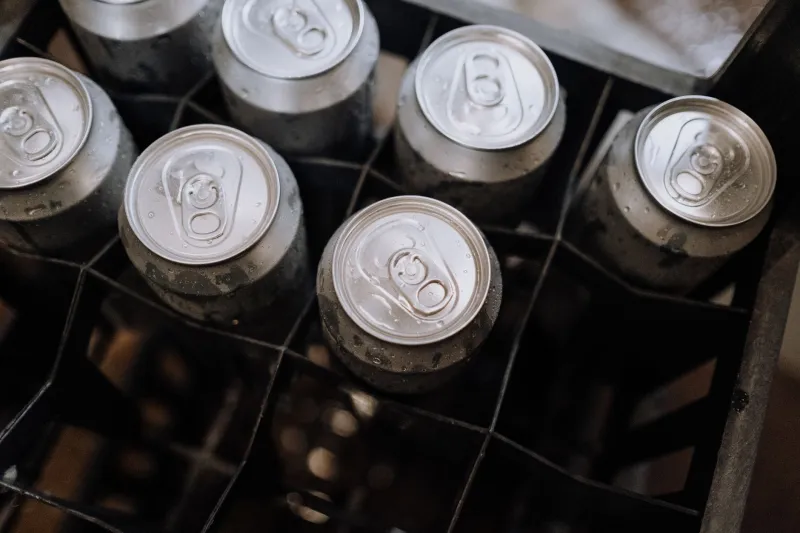
There is a particular northern noise that follows a cold snap: the sound of someone in a dressing gown opening the shed door, finding a box of canned cocktails from October, and saying, 'They'll be reet.' They will not always be reet. A can that has spent the night at minus six in a van, a garage or a boot is not simply a cold drink. It is a small pressurised vessel that has been through an event.
The physics bit, without the physics lesson
Alcohol and sugar both lower the freezing point of water, but not enough to make a 4% spritz immune to a Pennine night. As a rough guide: 4% ABV freezes around -1.5C to -2C; 7% around -3C; 10% around -4C; 15% nearer -6C; 20% nearer -9C. Sugar shifts those numbers a bit, but a shed at -5C is still well inside the danger zone for most low-strength tins. A 2% low-alcohol spritz is basically a flavoured ice lolly in a can.
Carbonation adds another problem. CO2 comes out of solution as the liquid freezes, pressure rises, and the can has to cope. Most cans are tough, but seams and linings are not designed for repeated freeze-thaw cycles. A bulging end is not a sign of character.
What the cold does to the drink
Freezing water expands by roughly 9%, which is why a can can distort even if it does not split. Texture is the first thing to go: emulsions in espresso martini or cream-based cans break, citrus oils go flat and dull, and the sugar-acid balance tastes muddy once thawed. Carbonation is often reduced and sometimes gone. A frozen mojito does not become a slushie with a straw; it becomes a sweet, flat, slightly sad glass of minty water.
Flavour damage is not just about freezing. A can left in a van for a week of freeze-thaw will have been through repeated temperature swings, and the lining can be stressed. If the seal is compromised, you are not just dealing with a flat drink. You are dealing with a food safety question.
The styles most likely to come back
The higher the ABV, the better the odds. A 15% negroni or a strong bottled-style old fashioned in a can has more alcohol and less water to freeze, so it may survive a cold night in better shape than a 4% spritz. Bitter, dry highballs with plenty of gin or tonic also tend to hold up better than creamy or fruit-forward styles.
The losers are predictable: low-alcohol spritzes, mojitos, anything with a cream element, and delicate citrus-led cans. If the tin is under 5% and it has been properly frozen solid, assume the texture and fizz are compromised. It may still be safe if the can is intact, but it will not be the drink the maker intended.
The inspection: when to bin the tin
Do this in daylight, not in a gloomy shed. Bin any can that is bulging, leaking, wet at the seam, rusty, deeply dented at the rim, or smells strange when opened. If the can has frozen and the seam is distorted, bin it. If it has split, bin it. Do not taste a can that has been leaking in a shed next to paint tins and a lawnmower.
If the can is intact and simply frozen, you can thaw it. Do not open it while frozen. Do not microwave it. Do not put it on a radiator. Do not refreeze it. Stand it upright on a tray in the fridge for 12 to 24 hours, depending on size and how solid it is. A 250ml can usually thaws overnight; a 330ml can may need a full day. If you are in a hurry, stand it in cool water, not hot.
The honest taste test
Once thawed, pour it into a glass. If it is flat but tastes clean, you can drink it, though it may be better used as a mixer than served to a guest. If it has separated, smells off, or tastes metallic, tip it. A can of cocktail is not worth a dodgy stomach on a December Tuesday.
Habits for the next cold snap
Keep tins in the house, not the shed, from late November. If you must use the van, treat it like a fridge only when the forecast is above 2C. Bring cans in before the temperature drops below minus 3C. Keep them off concrete floors, which get colder than shelves. And check the forecast before you buy a multipack for a party. A cold snap is not a reason to panic-buy; it is a reason to move the stock before it turns into a science experiment.