The Shrinking Serve: A Northern Audit of Canned Cocktail Value in 2026
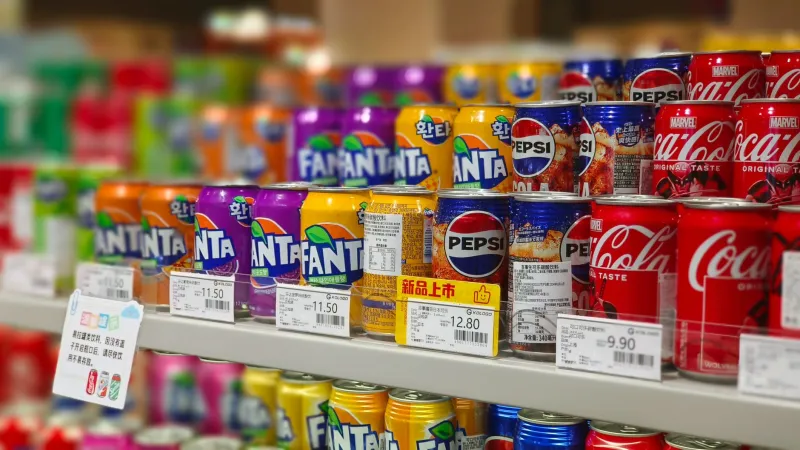
The can in your hand is not the can you remember
There is a quiet trick happening in the chiller. The can looks familiar. The brand is familiar. The price is, somehow, not familiar in a good way. But when you turn it over, the numbers tell a different story: 250ml instead of 330ml, 4% instead of 5%, a multipack price that has crept up while the liquid has crept down. Welcome to tinflation, the canned cocktail version.
To be clear, this is not a conspiracy. It is what happens when duty, production costs and retail margins all push in the same direction. But that does not mean drinkers should shrug and pay up. In the North, we are generally happy to pay for something good. We are less happy to pay more for less and be told it is a premium serve. So here is a shelf-level audit for 2026, and a guide to reading the can properly before you commit.
What the shelves are actually doing
We swept a sample of supermarkets, convenience stores and independent bottle shops from Manchester to Newcastle. This was not a laboratory test. It was a bloke-with-a-basket reality check. The pattern was consistent: the biggest changes are in can size and ABV, not in the loudest part of the label.
| Shelf example | What the label often says in 2026 | What to check | Northern verdict |
|---|---|---|---|
| Premium cocktail can, such as Moth or Longflint | 200-250ml, roughly 4-6% | Units per pound and whether it is a sipper or a session drink | Often good flavour, but poor value if you want length |
| Hard seltzer, such as White Claw | 330ml, roughly 4-5% | ABV drift and multipack price | Still sessionable, but less of a bargain than it once was |
| Alcopop-style can, such as VK or Smirnoff Ice | 275-330ml, roughly 4-5% | Sugar, strength and price per unit | Familiar, but not always the cheap round it looks |
| Gin and tonic can, such as Gordon's | 250ml, roughly 4-6% | Whether it uses real spirit or a flavoured malt base | Fine for convenience, not for cocktail purists |
None of this is about naming a villain. Ranges change, retailers price differently and a can that looks weak on one shelf may look fair on another. The point is that the label is doing more work than ever, and most of us are not reading it.
Why the numbers are moving
Since the 2023 duty overhaul, alcohol duty in the UK has been charged more directly by strength. The stronger the drink, the more duty is due per litre of pure alcohol. That gives any producer a financial reason to nudge a recipe down from 5% to 4%, or from 4.5% to 4%, without making a song and dance about it. It also makes smaller cans more attractive: less liquid means less duty, less packaging and lower shipping weight.
At the same time, aluminium, transport, warehousing and retail margins have all been under pressure. Something has to give. Sometimes it is the ABV. Sometimes it is the can size. Sometimes it is the amount of actual spirit in a drink that is sold on the promise of a cocktail. The result is a category that can still be good, but is far less uniform than the shelf suggests.
How to read a can properly
Start with three numbers: ABV, volume in millilitres, and price. Then do a small bit of maths. UK units are calculated by multiplying ABV by volume and dividing by 1,000. A 250ml can at 4% contains 1.0 unit. A 330ml can at 5% contains 1.65 units. If both cost £2.50, the second is giving you more alcohol per pound, but that does not automatically make it the better drink.
A more useful measure is units per pound. Divide the units by the price. The 250ml can at 4% gives you 0.4 units per pound. The 330ml can at 5% gives you 0.66 units per pound. That tells you what you are getting for your money in pure alcohol terms. It does not tell you whether the drink tastes any good, whether it is too sweet, or whether it is pretending to be a cocktail when it is really a flavoured fizzy drink.
That is why the second read matters. Look at the ingredients and the description. Does it name a spirit, or just a flavour? Does it tell you it is a mixed drink, a seltzer or a cocktail? Is the sweetness doing the heavy lifting? A lower-strength can with a proper bitter edge and a dry finish can be far better value than a stronger can that tastes like melted sweets.
The northern verdict
Canned cocktails are still giving value for money in 2026, but only if you shop selectively. The best independents are still making cans that taste like a drink rather than a briefing document. The weakest big-brand cans are relying on habit, and habit is expensive.
My rule is simple. If a can is under 250ml and over £3, it needs to be genuinely good to justify the outlay. If it is a 330ml session can at a sensible price, it can be a fair option for a train, a picnic or a night in. And if the label has shrunk, the ABV has dropped and the price has gone up, ask yourself whether you are buying a drink or a memory of one.
The North does not expect everything to be cheap. It does expect a fair deal. On that test, the category is not broken, but it is certainly asking drinkers to pay more attention. Read the can. Do the maths. Then decide whether the liquid inside is worth crossing the shop for.