The Handshake Before the Doorbell: Northern Rules for Bringing Cans to a Mate’s House
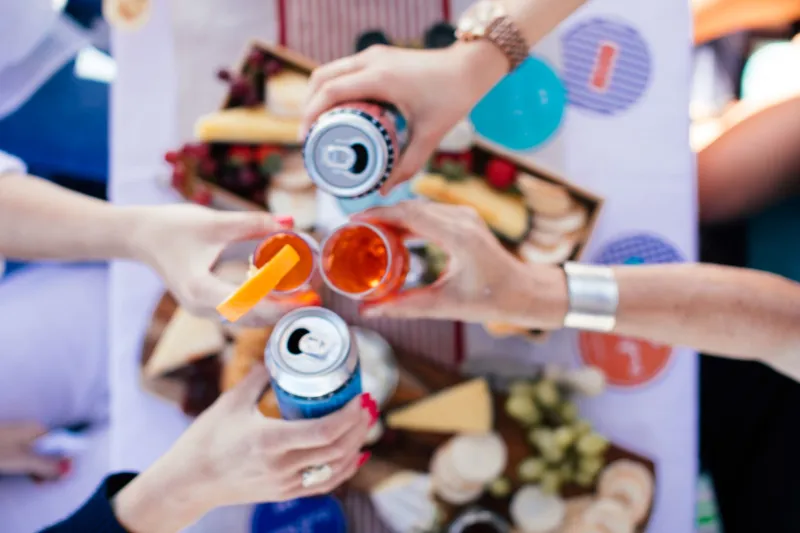
There is a moment, just before you ring a mate’s doorbell, when you look down at what you’ve brought and silently audit your own character. A bottle of wine says one thing. A carrier bag of reduced-price lager says another. A neat four-pack of canned cocktails, still cold from the corner shop chiller, says something else entirely: I have thought about this, but not in an exhausting way. In the North, that distinction matters.
The bring-a-tin is not a formal institution. Nobody has written it down, and if you tried to write it down in front of the wrong person they would tell you to stop being soft and put the kettle on. But the rules are there, passed around kitchens and back yards and group chats like a spare charger. Get them right and you are the guest people are genuinely pleased to hear from. Get them wrong and you are the person who turns up with a warm bottle of something complicated and no mixers.
The four-pack is a social contract
A four-pack of canned cocktails is the ideal unit of bring-a-tin generosity. It is enough to share without looking like you are catering the entire function. It fits in a bag. It does not demand a corkscrew, a decanter or a speech. And crucially, it gives the host options. They can take one, leave one for later, or quietly move the whole lot to the back of the fridge and pretend they forgot.
A bottle, by contrast, can be oddly heavy social luggage. It looks generous, but it often creates work. Someone has to find a opener, or a suitable glass, or a reason to open it when everyone else is already on the tins. If the host is having a quiet one and you arrive with a large bottle of something, you have essentially handed them a small task with a bow on it. The four-pack says: here is a round, not a project.
The other advantage is variety. Canned cocktails let you bring a mixed four-pack — a sharp citrus number, a darker sipping tin, a low-alcohol option — without turning the evening into a tasting session. It reads as thoughtful rather than fussy. And if one flavour does not land, nobody has to be polite about a whole bottle of it.
Do not outshine the host’s chiller
This is the rule people break most often, usually with good intentions. You arrive with eight cans, a bag of ice and a plan. The host opens the fridge and you see it: a shelf already negotiated with military precision. There is a tub of something covered in foil, two beers, a carton of milk and a jar of something pickled. Your contribution cannot simply barge in.
Chiller space is sacred ground. Ask before you fill it. Better still, bring your cans cold and offer them from the bag first. If the host says to stick them in, put in what will realistically be drunk and leave the rest in your bag. Do not rearrange their shelves. Do not move the foil-covered tub. Do not stand there holding the door open while the cold air escapes and the host’s patience follows it out.
There is also a delicate question of quality. Bring something you would happily drink yourself, but not something so flash that it makes the host’s own offering look like an afterthought. The sweet spot is a well-made tin with a bit of character — dry, balanced, not trying too hard. If you are unsure, bring two good ones and two sensible ones. That way the host can choose the tone.
The low-alcohol tin and the one-for-the-road moment
One of the quiet blessings of the canned cocktail boom is that low-alcohol no longer means a sad orange juice in a posh glass. In 2026 there are proper 2% and 3% tins that taste like something you would actually choose, not something you were handed as a consolation prize.
This matters for the bring-a-tin. A low-alcohol option is not a failure of nerve; it is good etiquette. It means the guest who is driving, pacing themselves or simply not in the mood for a third proper drink still has something in their hand that looks and feels like a round. It also gives the host an exit strategy. The best bring-a-tin includes at least one lighter tin for the point in the evening when everyone is saying one for the road but nobody actually needs the road to be any longer.
Do not announce it like a health campaign. Just put it in the bag. If someone asks, tell them it is decent. That is all the marketing it needs.
What to bring, by occasion
A quiet Sunday catch-up
Two good cans and one low-alcohol option. Think something crisp and citrus-led, plus a darker, softer tin for later. Do not bring a party pack. The clue is in the word quiet. If there is a roast involved, bring a can that can handle gravy and Yorkshire puddings without turning into a perfume counter.
A birthday do
A mixed four-pack is the minimum. If the host has specified a theme, respect it. If they have not, aim for something that works with cake, crisps and the likelihood that someone will put music on too early. A bright, fizzy number and a proper espresso martini tin are safe bets. Bring a spare can for the person who forgot.
A housewarming
This is where a four-pack plus something small and useful wins. Not a plant that will die by Bonfire Night. Not a candle that smells like a car air freshener. A good four-pack and a bag of decent ice is a genuinely helpful gesture. If the new place has no chiller space yet, keep your cans cold and hand them round.
A match, a quiz or a telly night
Bring something sessionable. This is not the moment for a 12% barrel-aged thing that needs to be discussed. A dry, bitter-leaning tin or a low-alcohol spritz works well. Bring four, drink two, leave two. That is the northern circle of life.
The exit tin and the thank-you
Eventually the evening reaches its natural end. The host starts stacking glasses. Someone says they should probably make a move. This is when the exit tin earns its place. If you have a spare low-alcohol can in your bag, offer it. Not as a grand gesture, just as a final round. It softens the goodbye and gives the host something to drink once the door is closed and the plates are being loaded into the dishwasher.
The bring-a-tin is not really about the drink. It is about showing up with a bit of thought, a bit of restraint and enough to share. The can is just the handshake. The rest is knowing when to put it in the chiller, when to leave it in the bag and when to say goodnight.